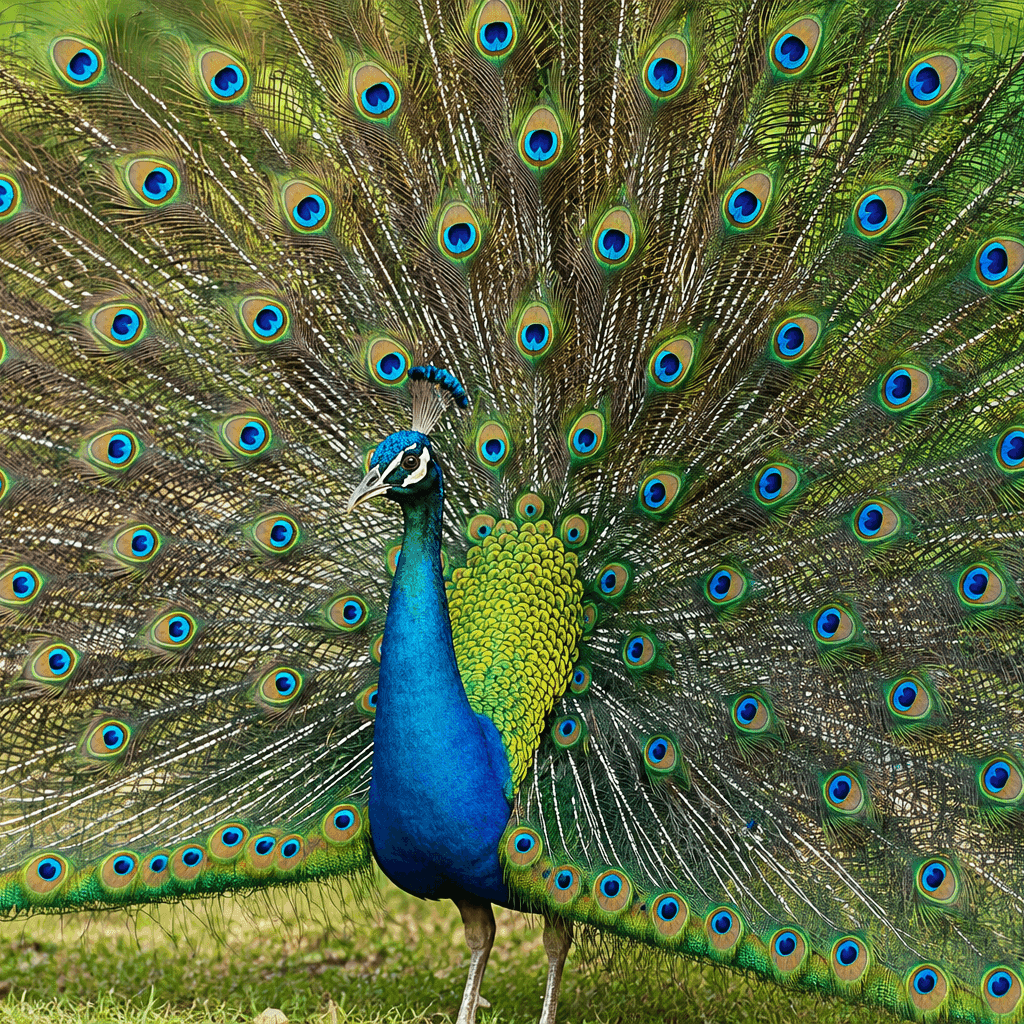
Chapter 1: Why the 12-Hour Safari is the Connoisseur’s Choice
While the vast majority of tourists visiting Udawalawe National Park opt for standard three-hour morning or evening safaris, seasoned wildlife naturalists, conservationists, and serious nature documentarians understand an indisputable truth: a half-day safari offers only a fleeting preview of this grand ecological theater. In a standard brief excursion, vehicles rarely venture further than ten or fifteen kilometers from the primary gate, confining their routes to the most heavily trafficked gravel corridors of the southern quadrant. By contrast, embarking on a comprehensive, twelve-hour full-day safari expedition—entering at 6:00 AM dawn and departing at 6:00 PM sunset—unlocks the vast, untouched heart of the reserve, granting access to secluded hinterlands where human encounters are virtually non-existent and animal behaviors unfold with untamed natural authenticity.
Covering 308 square kilometers of dynamic dry-zone terrain, Udawalawe encompasses far more than open grasslands. Its boundaries harbor dense deciduous scrub, towering riparian gallery forests, rocky granitic inselbergs, forgotten teak plantations, and complex marshland systems. On a full-day expedition, you are not merely a spectator passing through on a rigid timetable; you become an organic, integrated component of the landscape, attuned to the subtle shifts in wind, temperature, scent, and animal acoustics that govern the tropical rhythm from first light until deep twilight.
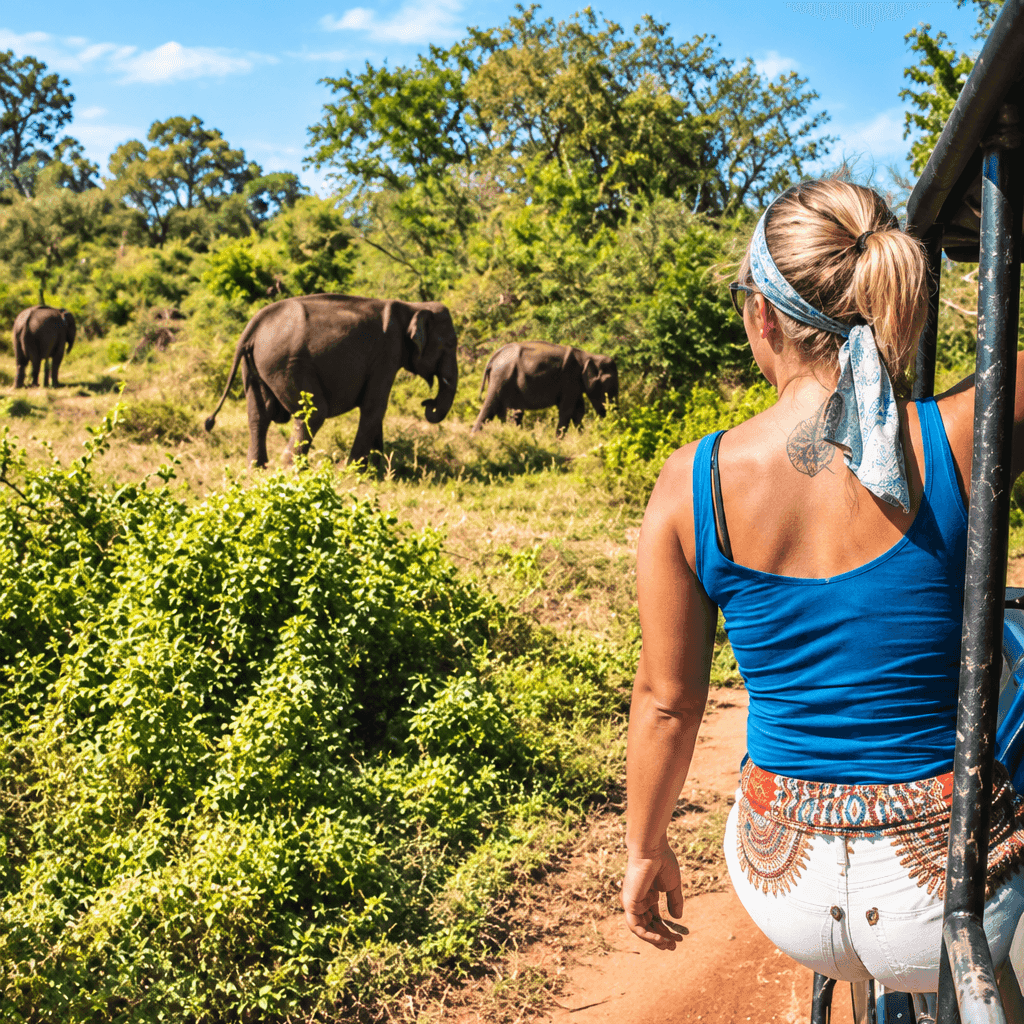
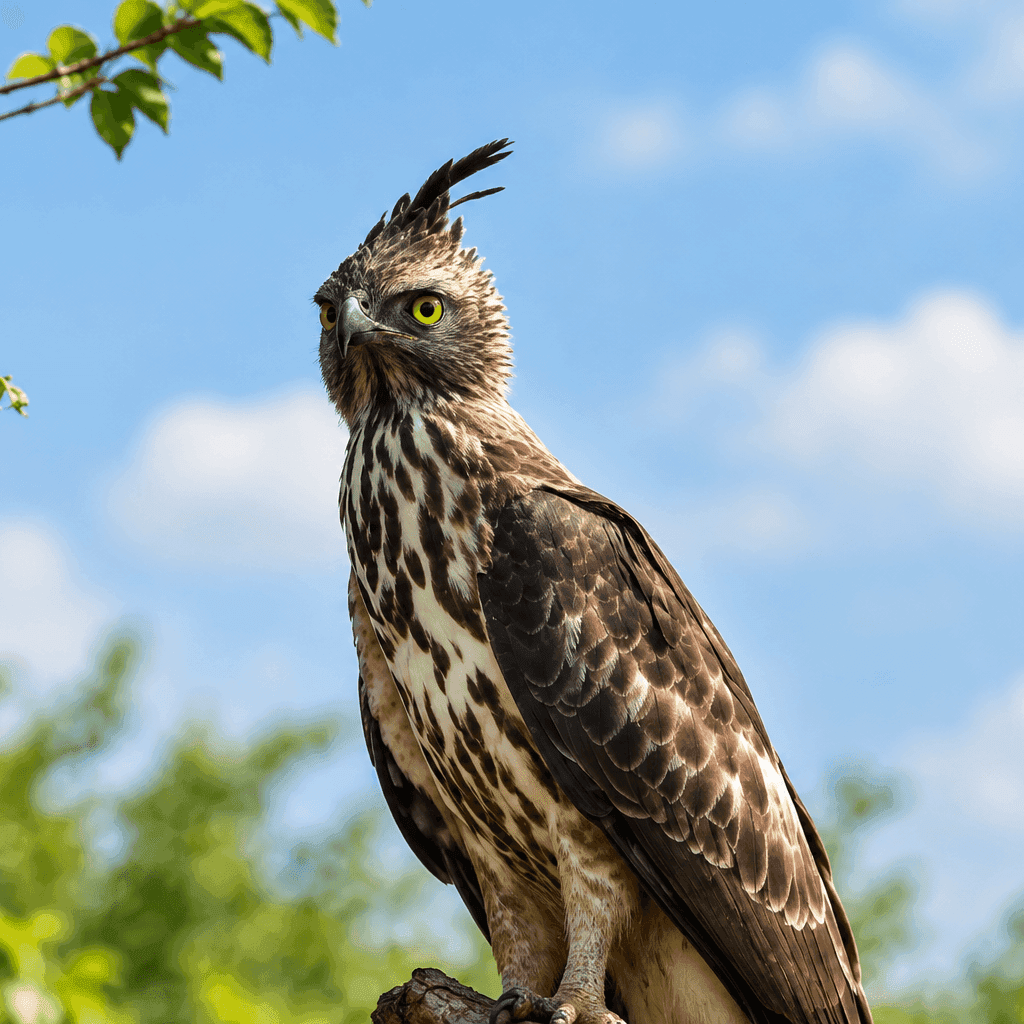
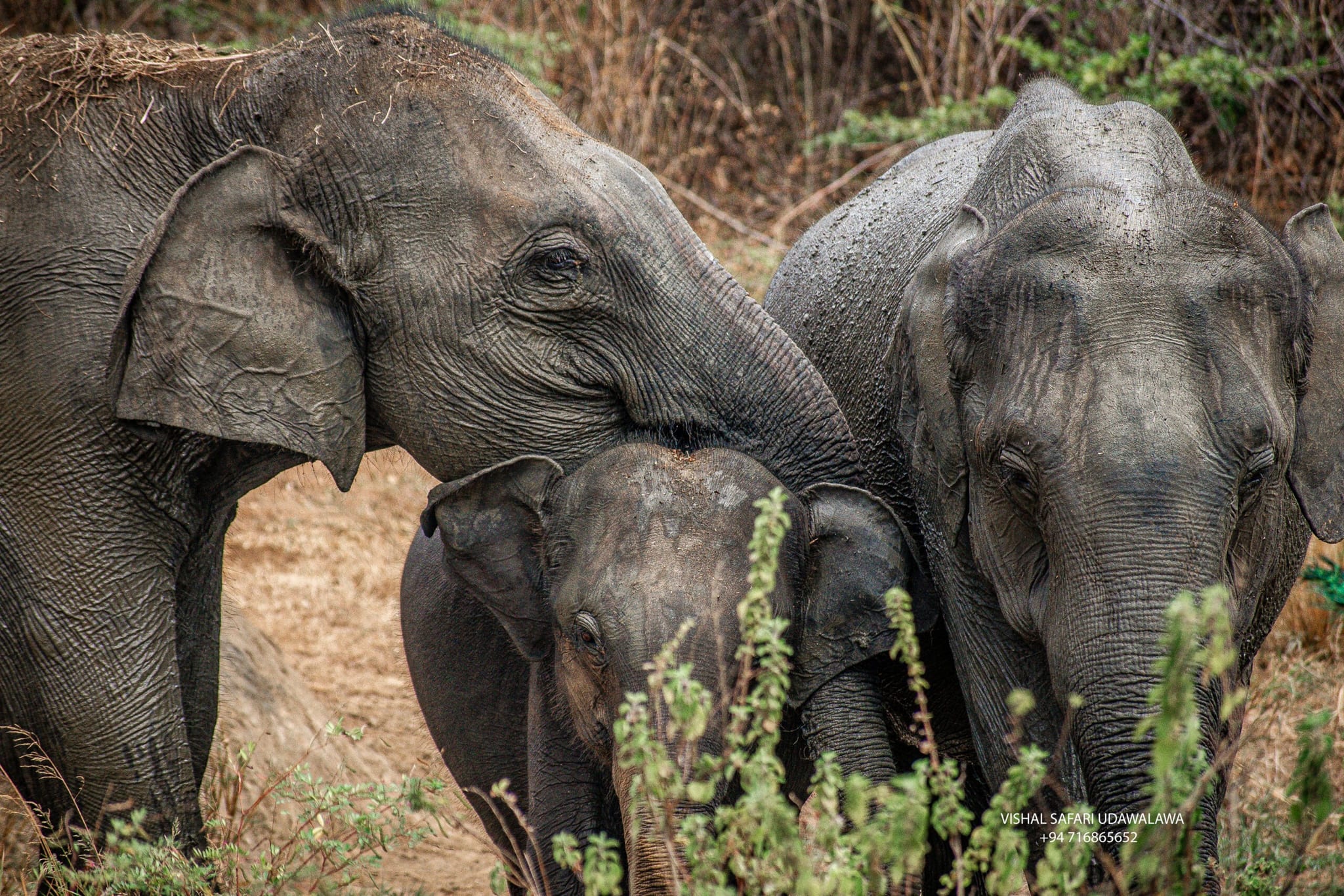
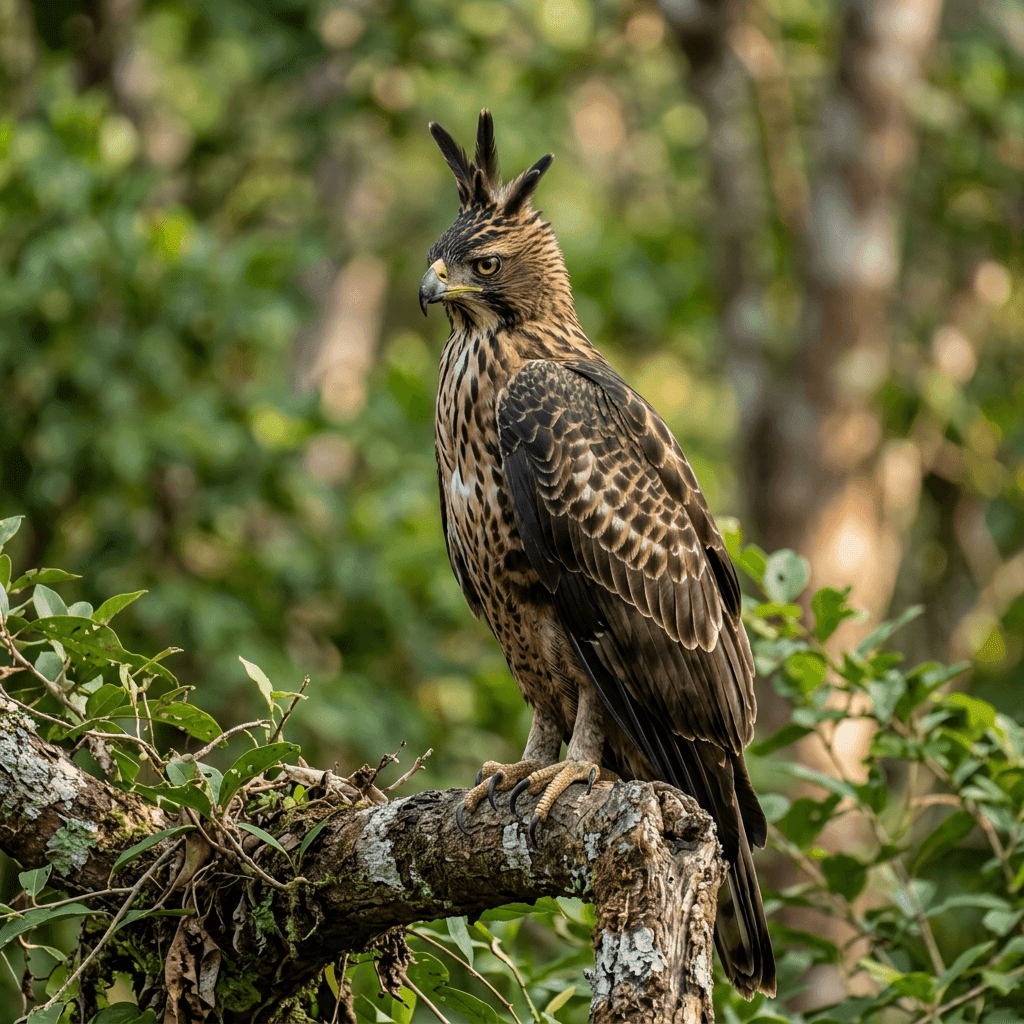
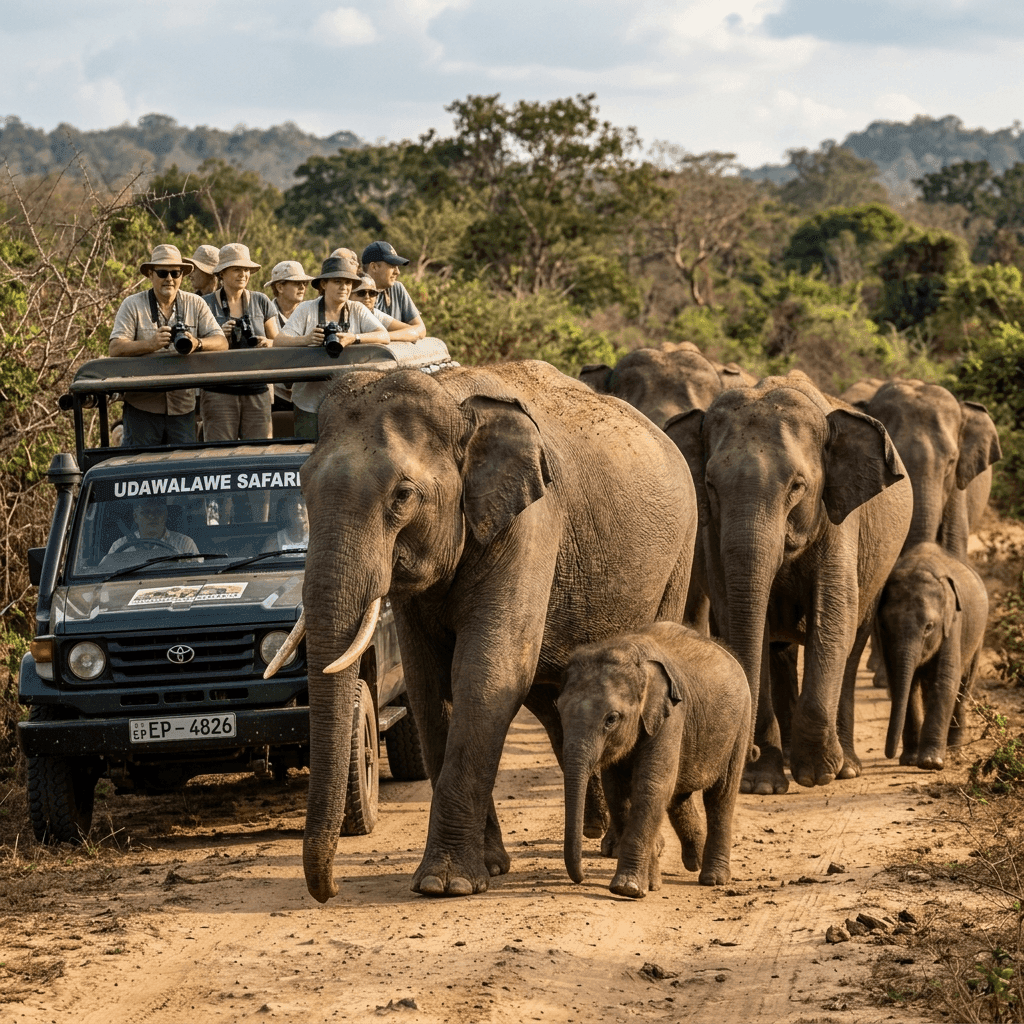
The philosophical beauty of the twelve-hour safari lies in the luxury of unhurried patience. When observing an elephant family herd on a brief tour, drivers are perpetually under pressure to keep moving to fulfill an arbitrary itinerary. On a full-day expedition, you have the profound freedom to switch off the diesel engine and simply wait for forty-five minutes or an hour beside a quiet lagoon. You witness intimate, unscripted dramas: a newborn calf attempting to navigate a steep muddy riverbank with the gentle physical assistance of its mother's trunk; young juvenile bulls testing their strength in mock wrestling matches; or a Crested Serpent Eagle methodically subduing and consuming a venomous pit viper in the branches above your vehicle. It is in these quiet, unhurried interludes that the true spirit of wild Sri Lanka reveals itself.
Chapter 2: Navigating the Unseen Udawalawe: The Deep Hinterlands
A full-day safari allows your expert driver to navigate deep into the remote northern and northeastern sectors of the park—areas rarely seen by standard tourists. These sectors hold distinct ecological characteristics and geological formations that differ dramatically from the southern savanna plains.
1. The Mau Ara Wilderness & Feeder Canal Sector
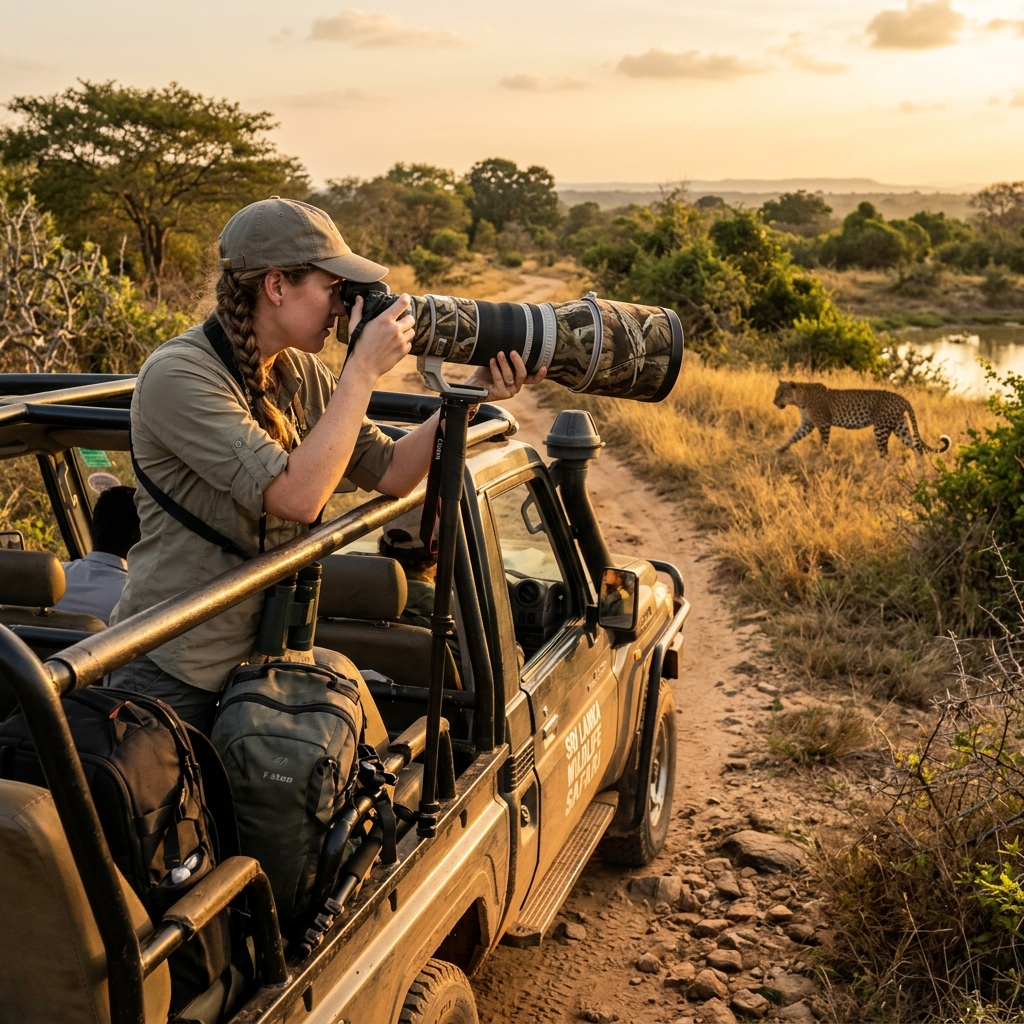
Located in the distant northeastern reaches, the Mau Ara sector marks the confluence where natural waterways merge into the national park. Here, the landscape transitions into dense secondary riverine jungle interspersed with extensive seasonal wetlands. Because tourist vehicles rarely penetrate this quadrant, wildlife in Mau Ara exhibits natural, completely undisturbed behaviors. Large herds of Spotted Deer (Axis axis) graze in herds numbering sixty to eighty individuals, exhibiting acute alertness to the calls of peacocks and langurs. In this quiet sector, the elusive Sri Lankan Leopard (Panthera pardus kotiya) is occasionally observed crossing secluded sandy tracks, utilizing the thick scrub cover to stalk wild boar sounders.
2. The Kiri-ibbanwela Plains and Forgotten Wetlands
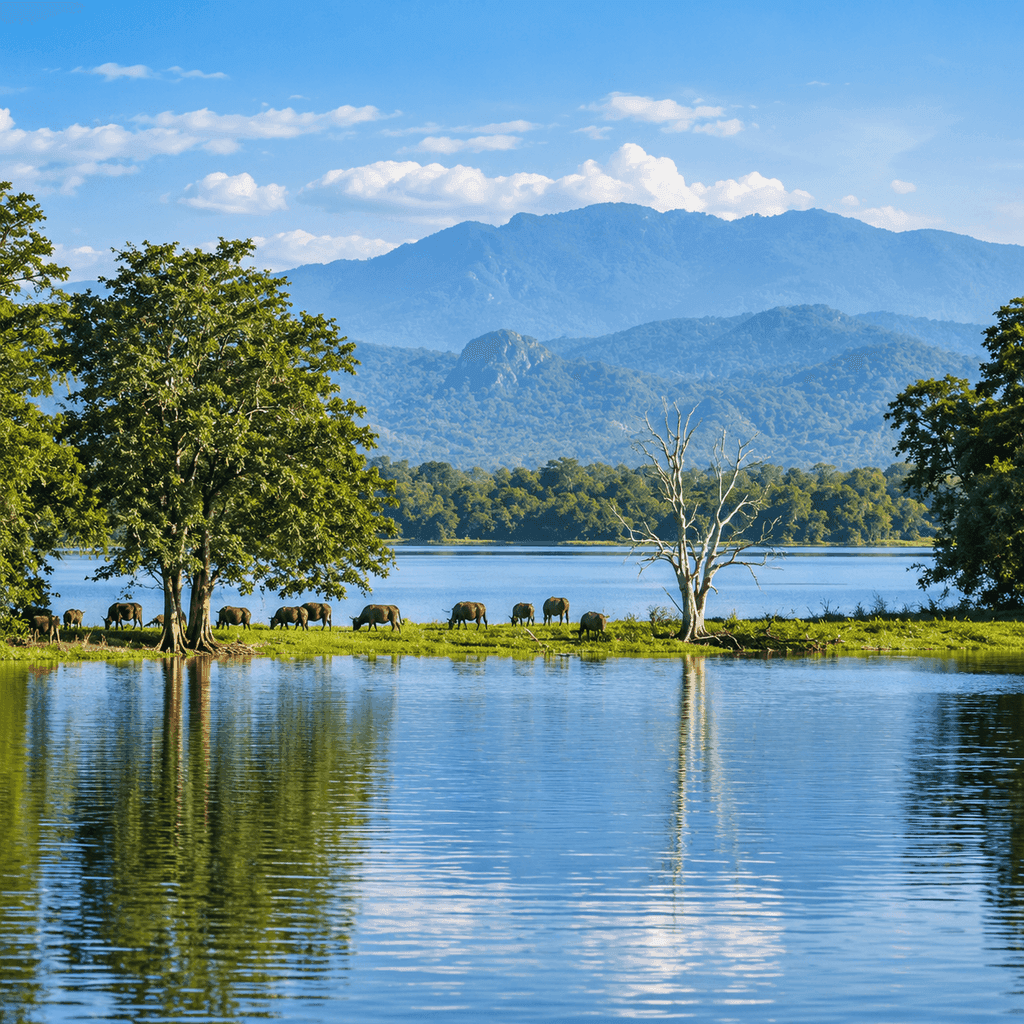
Deeper still lies Kiri-ibbanwela, an expansive inland flood basin dotted with historic earthen irrigation reservoirs (*wewas*) constructed by ancient Sinhalese hydraulic engineers over a millennium ago. During the dry season, the receding waters expose lush emerald carpet grasses that act as an irresistible magnet for colossal gatherings of wild water buffalo (Bubalus arnee) and roaming elephant bachelor coalitions. The silence in Kiri-ibbanwela is profound; with no other jeeps in sight, the only sounds are the rhythmic tearing of grass, the flapping of elephant ears, and the mournful calls of lapwings echoing across the water.
3. The Teak Forests and Ancient Granitic Monoliths
In the northwestern quadrant, the terrain rises toward rocky granitic ridges and remnants of historic teak forest plantations. Here, massive teak trees (Tectona grandis) with broad, plate-sized leaves form shaded green corridors. The elephant herds frequenting this zone exhibit unique foraging behaviors, stripping the fibrous bark from teak trunks with their tusks and teeth to extract essential minerals and moisture. The granitic outcrops provide elevated lookouts where raptors nest and troops of Tufted Gray Langurs sun themselves on warm boulders.
Chapter 3: Midday Biology: How Animals Survive Equatorial Heat
Many travelers wonder: "What happens during the middle of the day between 11:30 AM and 2:30 PM when the sun is overhead?" While common safari folklore suggests that "all animals disappear at noon," an experienced naturalist knows that the midday hours reveal some of the most fascinating behavioral adaptations in tropical biology.
As equatorial temperatures soar past 34°C, diurnal mammals do not vanish; they strategically relocate to micro-habitats that optimize thermoregulation. Elephants move toward deep riverine gallery forests along the Walawe River. Beneath the dense, contiguous canopy of mature Kumbuk trees (Terminalia arjuna), ambient temperatures are routinely five to seven degrees cooler than on the open plains. Here, elephants engage in quiet, meditative browsing, consuming water-rich bamboo leaves and tree bark while resting in deep shade. Observing a multi-generational elephant herd resting quietly in cathedral-like forest light—with tired calves sleeping flat out on their sides while watchful mothers gently fan them with their ears—is an intimate, deeply moving spectacle rarely witnessed on standard morning or afternoon tours.
For cold-blooded ectothermic reptiles, the midday sun dictates a different strategy. Mugger Crocodiles (Crocodylus palustris), which require morning sun to elevate their body temperatures, must avoid lethal overheating by midday. Between 11:00 AM and 2:00 PM, crocodiles either submerge completely into deep, cool underwater river channels or haul out into dense riverbank thickets with their jaws propped wide open in a behavior known as "gaping." This mouth gaping facilitates evaporative cooling across the vascularized tissues of the mouth lining, preventing heat-induced brain stress.
Birdlife also adapts with exquisite precision. Small passerines, flycatchers, and babblers fall largely silent, perching motionless in dense thorn scrub to conserve energy. Conversely, apex scavengers take full advantage of the midday furnace. As the ground radiates intense heat, colossal thermal updrafts spiral into the upper atmosphere. High in the blue sky, White-bellied Sea Eagles and Crested Serpent Eagles circle effortlessly without flapping a wing, soaring on thermal elevators to patrol vast territories while scanning the shimmering landscape below.
Chapter 4: Hour-by-Hour Expeditional Itinerary
A full-day safari requires meticulous operational pacing. Below is the field-tested expedition blueprint followed by elite safari guides:
- 5:15 AM – Pre-Dawn Hotel Departure: Private collection from your accommodation. Early transit allows you to reach the gates before crowds assemble.
- 5:45 AM – Administrative Gate Clearance: Driver finalizes all day-pass documentation with Department of Wildlife Conservation (DWC) officers.
- 6:00 AM to 9:00 AM – The Sunrise Savanna Sweep: The expedition begins with a high-energy transit through the southern savannas. Active feeding herds, playful elephant calves, and ground-foraging birds are observed in crisp, golden light.
- 9:00 AM to 11:30 AM – Penetrating the Deep Interior: Moving away from the crowded primary loops, the jeep heads toward the northern boundary tracks, Mau Ara, and the interior teak plantations. Solitary tuskers, deer herds, and rare raptors dominate this leg.
- 11:30 AM to 1:30 PM – The Riverbank Rest & Midday Picnic: The jeep navigates to an authorized, ranger-supervised wilderness rest site along the shaded banks of the Walawe River. Passengers disembark, refresh, stretch, use clean facilities, and enjoy a curated, multi-course bush lunch.
- 1:30 PM to 3:30 PM – Shaded Riparian Forest Exploration: The vehicle traverses deep gallery forests and interior watercourses. Observe resting elephant herds in the shade, arboreal primates, and riverine birds.
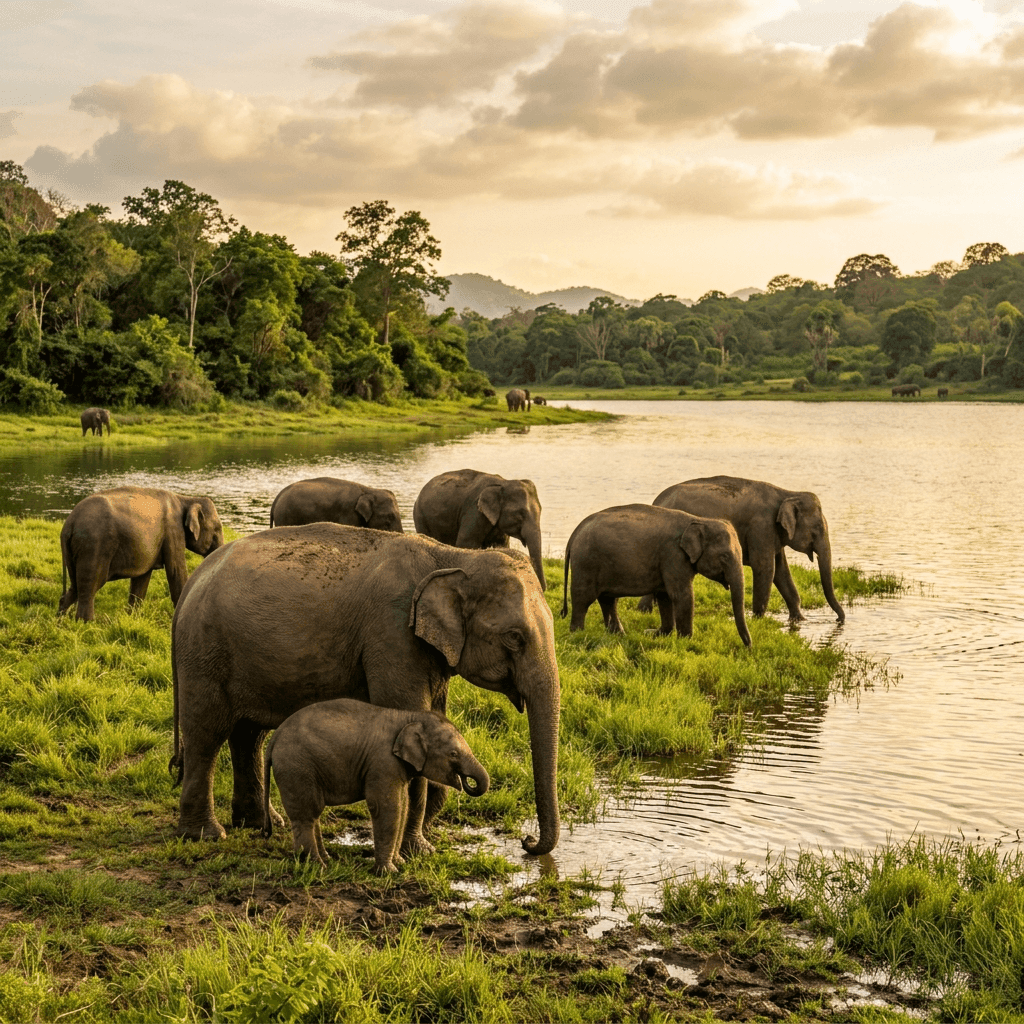
- 3:30 PM to 5:15 PM – The Afternoon Waterhole Resurgence: As temperatures cool, the jeep transitions to the primary reservoir shorelines. Witness massive gatherings of elephants swimming, wallowing in mud, and interacting across family clans.
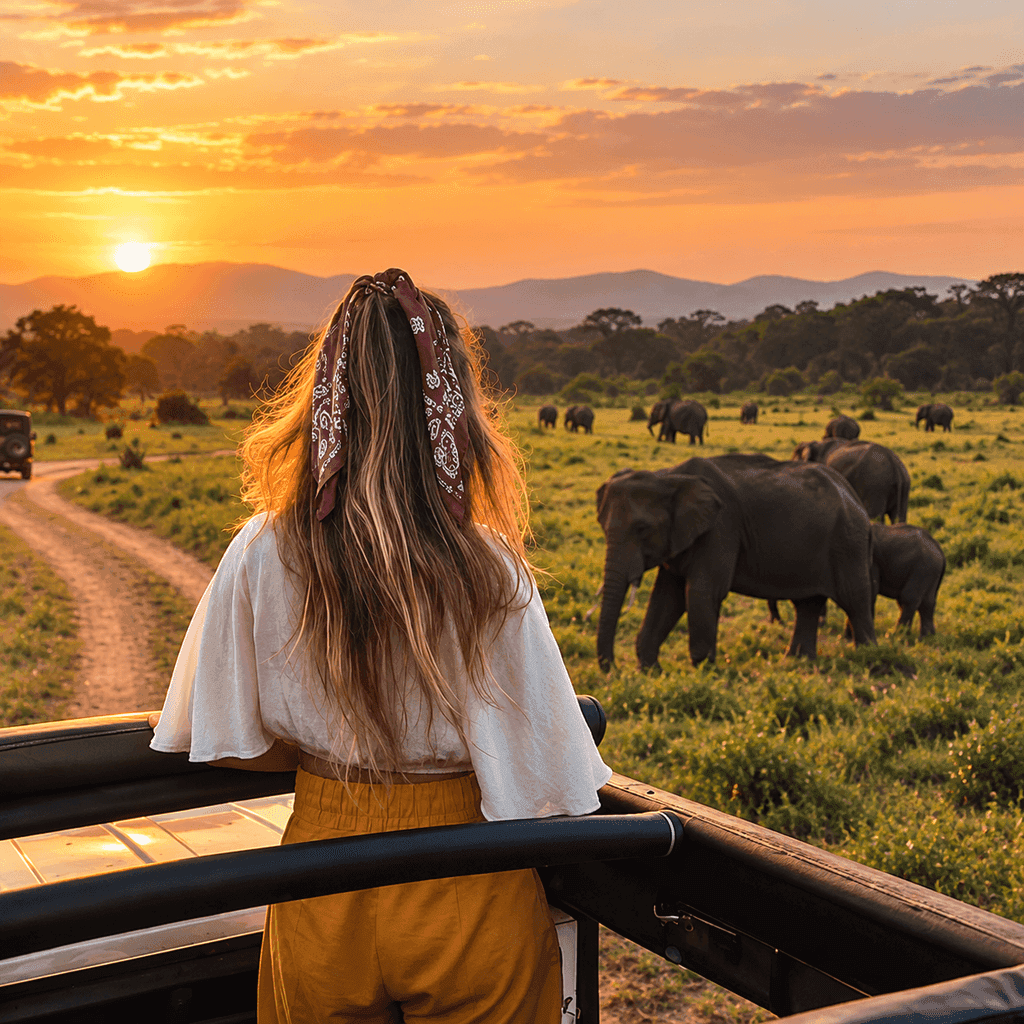
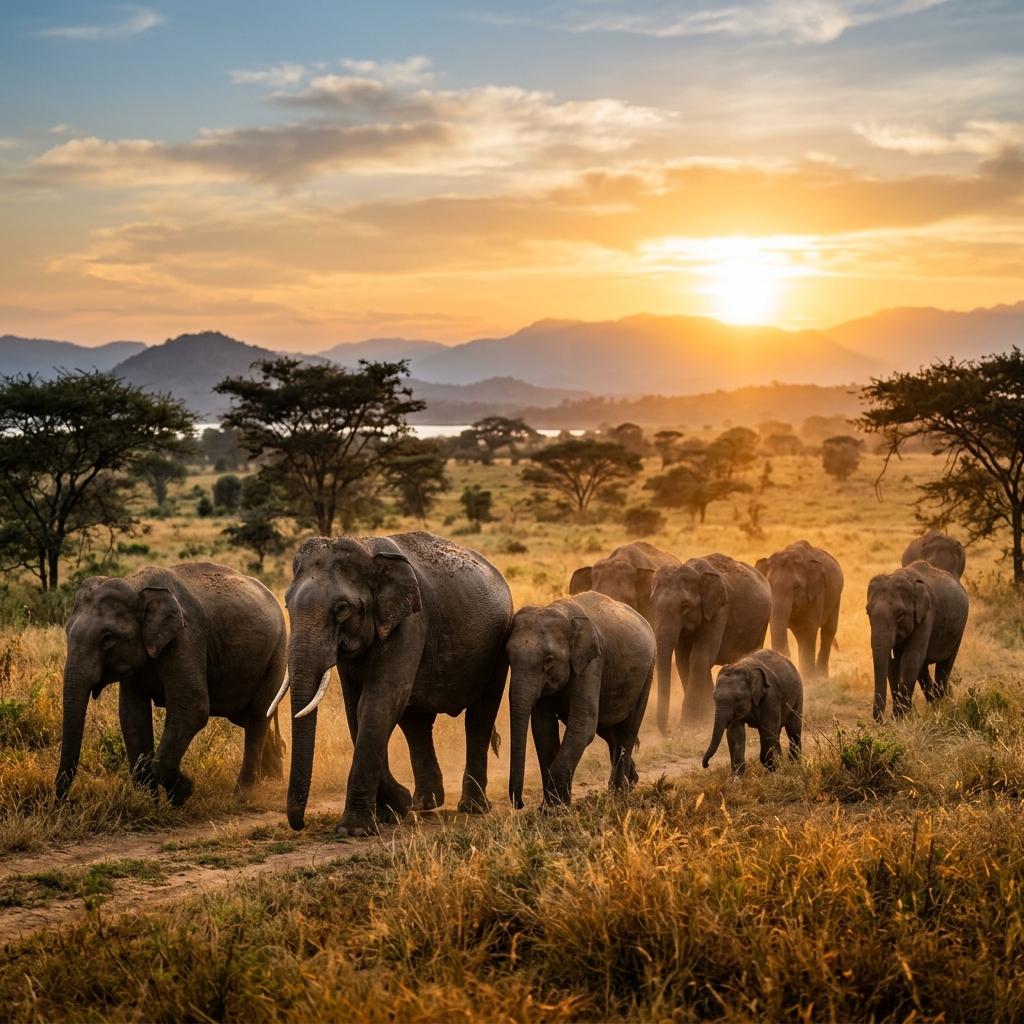
- 5:15 PM to 5:50 PM – Golden Hour Silhouette Masterclass: The setting sun bathes the plains in deep gold and amber. Capture iconic backlit silhouettes of elephants against the burning horizon.
- 6:00 PM – Park Exit & Twilight Departure: Final checkout at the main gate, concluding a magnificent 12-hour wilderness odyssey.
Chapter 5: The Midday River Rest Experience: Dining in the Wild
One of the supreme highlights of a full-day expedition is the midday break at the designated park rest site along the Walawe River. While half-day visitors are rushed out of the park by 10:00 AM or wait in their hotel rooms until 3:00 PM, full-day guests remain immersed in the wild, enjoying an unforgettable alfresco lunch under the cathedral canopy of giant Kumbuk trees.
The rest site is situated on a high, sandy bluff overlooking a wide bend in the river. Department of Wildlife Conservation rangers supervise the area, ensuring absolute safety while preserving natural tranquility. Wooden picnic tables and clean, tiled restroom facilities provide civilized comfort in the heart of raw wilderness. As you unpack your safari lunch—often featuring fragrant Sri Lankan yellow rice wrapped in heated banana leaves, curried chicken or fish, tempered lentils, crispy papadums, fresh mangoes, and chilled tropical juices—the river below flows peacefully over smooth granite boulders.
Birdwatching from the rest site is extraordinary. Colorful Stork-billed Kingfishers with massive red bills flash blue across the water, perched Oriental Pied Hornbills clatter their beaks in the branches above, and troops of inquisitive Tufted Gray Langurs watch from a respectful distance in the canopy. It is a moment of profound sensory peace—recharging body and mind before embarking on the afternoon half of your adventure.
Chapter 6: Physical Preparation, Jeep Comfort & Hydration Strategies
Spending twelve consecutive hours in a four-wheel-drive vehicle traversing unpaved, corrugated dirt tracks demands physical preparedness and smart gear strategy. Implement these practical tips to ensure all-day comfort:
1. Custom Seating & Shock Absorption
While professional safari jeeps feature cushioned tiered passenger seats, twelve hours of continuous vibration can cause fatigue. Request your operator to provide additional foam seat cushions or lumbar support pads. Inflatable travel neck pillows and lightweight lumbar cushions significantly dampen road vibrations across long corrugated tracks.
2. The Science of Hydration in the Dry Zone
The combination of dry wind, warm temperatures, and open-air travel causes rapid, insensible fluid loss through perspiration and breathing. Do not wait until you feel thirsty to drink; thirst is a late-stage indicator of cellular dehydration. Consume a minimum of 2.5 to 3.0 liters of fluid throughout the twelve hours. Supplement plain water with electrolyte replacement packets containing sodium, potassium, and magnesium to prevent heat fatigue, headaches, and muscle cramping.
3. Electronics & Power Management
Shooting hundreds of high-resolution RAW photographs and 4K wildlife video clips over twelve hours drains camera batteries at an alarming rate. Always carry a minimum of three fully charged camera batteries and a high-capacity (20,000mAh+) power bank equipped with USB-C Power Delivery. Many modern professional safari jeeps feature onboard 12V DC auxiliary sockets or USB charging ports; verify this with your operator when booking.
4. Clothing Adaptability & Midday Changes
Pack a secondary lightweight cotton t-shirt in your daypack. Changing out of your morning shirt into a fresh, crisp cotton shirt during the midday riverbank lunch stop provides an instant, dramatic psychological and physical refresh, making the afternoon drive feel like an entirely new expedition.
Chapter 7: Deep-Track Wildlife: Secretive Mammals & Rare Reptiles
Because full-day safaris explore undisturbed interior habitats, your chances of observing the park’s shyer, less common biodiversity increase exponentially compared to brief tours:
- The Indian Star Tortoise (Geochelone elegans): Renowned for the geometric star-like patterns radiating across its domed carapace, this beautiful terrestrial herbivore is frequently spotted grazing on low succulent herbs in dry savanna clearings between 9:00 AM and 11:00 AM.
- The Barking Deer / Southern Red Muntjac (Muntiacus vaginalis): A diminutive, shy solitary deer that inhabits dense gallery forest. When startled by a leopard or python, it emits a loud, dog-like bark that echoes through the trees, alerting the entire forest to the presence of danger.
- The Ruddy Mongoose (Urva smithii): Identifiable by its reddish-brown grizzled coat and distinctive black-tipped tail held curled upwards, this diurnal carnivore is regularly seen hunting crabs along forest streams and foraging for scorpions and snakes beneath rotting logs.
- The Water Monitor (Varanus salvator): Reaching lengths exceeding two meters, these massive semi-aquatic lizards patrol the edges of the reservoir and irrigation canals, hunting for frogs, fish, carrion, and crocodile eggs with their powerful claws and long, whip-like tails.
Chapter 8: Wildlife Photography Throughout the Shifting Day
A full-day safari presents a complete, challenging spectrum of lighting conditions. Master these photographic workflows across the twelve-hour continuum:
| Time Window | Lighting Characteristics | Optimal Camera Configuration | Target Wildlife Subjects |
|---|---|---|---|
| 6:00 AM – 7:30 AM | Soft dawn, golden horizontal light, morning mist | Aperture f/2.8 - f/4, ISO 800 - 1600, Shutter 1/1000s | Active foraging elephant herds, dew-covered spiderwebs, perched raptors |
| 7:30 AM – 10:30 AM | Bright, crisp directional sunlight, rich contrast | Aperture f/5.6 - f/8, ISO 200 - 400, Shutter 1/1600s | Basking crocodiles, deer herds, kingfishers, flying waterfowl |
| 10:30 AM – 2:30 PM | Harsh overhead glare, deep shadows, heat shimmer | Aperture f/5.6, Circular Polarizer filter, spot metering | Shaded forest elephant resting, macro textures (elephant skin, eye portraits) |
| 2:30 PM – 4:30 PM | Softening afternoon light, warm ambient tones | Aperture f/4 - f/5.6, ISO 400, Shutter 1/1250s | Mud wallowing, bathing elephants, water buffalo herds |
| 4:30 PM – 6:00 PM | Golden hour, rich amber rays, sunset silhouettes | Aperture f/2.8 - f/4, ISO 800 - 3200, Exposure comp -1.0 EV | Backlit dust sprays, rim-lit bull tuskers, crimson sunset silhouettes |
Chapter 9: Cost vs Value Analysis: Comparing Half-Day to Full-Day Safaris
When evaluating safari investments, travelers often weigh the financial difference between standard half-day tours and full-day expeditions. Analyzing the cost structure reveals why the full-day safari delivers exceptional value per wildlife hour:
1. Single Permit Advantage: When taking two separate half-day safaris across two days (e.g., morning on Tuesday and evening on Wednesday), you must purchase official Department of Wildlife Conservation (DWC) entrance permits, vehicle entrance fees, and service taxes twice. On a full-day safari, a single comprehensive day ticket covers your entire 12-hour entry from 6:00 AM to 6:00 PM, saving substantial administrative and vehicle entry overheads.
2. Fuel & Vehicle Economy: A full-day safari requires one round-trip hotel transfer rather than two, saving travel time and vehicle staging costs. Most importantly, your jeep driver is dedicated exclusively to your party for the entire day, eliminating rushed schedules and allowing seamless, flexible transitions based entirely on live wildlife sightings.
3. Wildlife Return on Investment: In terms of sheer species diversity and rare behavioral sightings, a full-day expedition typically delivers three to four times the photographic yield of a single three-hour drive. You avoid the peak crowds of the mid-morning gate rush, explore completely deserted interior sectors, and enjoy the premier hours of both dawn and dusk in a single seamless adventure.
Chapter 10: Frequently Asked Questions (FAQ)
Q1: Is a 12-hour safari too exhausting for average travelers?
While twelve hours in an open jeep is undeniably a full day, the expedition is carefully paced with alternating phases of active game driving, slow stationary observation, and a generous two-hour relaxing lunch break in the shade of the riverbank rest site. Most travelers find that time flies extraordinarily fast because the landscape and animal behaviors are continuously changing.
Q2: What is included in the full-day safari lunch?
Professional safari operators provide an extensive, hygienic bush lunch packed in thermal cooler boxes. Typical offerings include traditional Sri Lankan yellow rice with chicken or fish curry, dhal, tempered vegetables, and crispy papadums, or Western options such as gourmet chicken/vegetable baguettes, hard-boiled eggs, fresh seasonal fruits (papaya, pineapple, watermelon), mineral water, and chilled fruit juices.
Q3: What restroom facilities are available during a 12-hour drive?
The Department of Wildlife Conservation maintains clean, western-standard restroom facilities at the designated riverbank rest sites inside the park. You will have full access to these facilities during your scheduled midday break, as well as at the main entrance gate before entry and upon exit.
Q4: What happens if the weather is extremely hot during the afternoon?
Professional safari jeeps are outfitted with full-coverage canvas canopy roofs that shield passengers from direct overhead sunlight throughout the day. Furthermore, experienced drivers spend the hottest hours navigating shaded gallery forests and breezy river corridors where moving air keeps the vehicle pleasantly comfortable.
Q5: Can full-day safaris accommodate vegetarian or gluten-free dietary requirements?
Yes. Because safari meals are freshly prepared to order by local chefs on the morning of your trip, operators can easily accommodate vegetarian, vegan, gluten-free, or allergy-specific requests. Inform your operator of your dietary preferences at the time of booking.
Q6: Are children allowed on a full-day safari?
Full-day safaris are ideal for older children (ages 10 and above) who possess an active interest in animals and nature. For very young children (under age 7), twelve hours in a jeep can be physically challenging; for families with toddlers, booking a four-hour morning safari is generally recommended.
Q7: What type of vehicle is used for a full-day expedition?
Full-day expeditions utilize modified four-wheel-drive Toyota Hilux, Land Cruiser, or Mitsubishi safari jeeps featuring heavy-duty suspension, elevated tiered seating for unobstructed 360-degree viewing, padded safety railings, high ground clearance, and all-weather roll-down protective canvas curtains.
Q8: Do drivers speak English?
Reputable safari companies assign their most experienced, senior naturalist drivers to full-day expeditions. These drivers possess excellent conversational English, deep ornithological and mammalogical knowledge, and an intimate understanding of animal tracking and photographic positioning.
Q9: How far in advance should a full-day safari be booked?
Because full-day expeditions require specialized driver allocation, permit planning, and custom bush meal catering, it is advisable to reserve your tour at least two to four weeks in advance, especially during the peak travel months from December to April.
Q10: Can we bring our own snacks and beverages?
Yes, absolutely. You are welcome to bring personal snacks, energy bars, specialized electrolyte tablets, or additional beverages. Coolers with ice packs are provided onboard your private safari jeep to keep your personal items refreshingly cold throughout the entire day.
.png)