Chapter 1: The Seduction of Golden Hour in Udawalawe
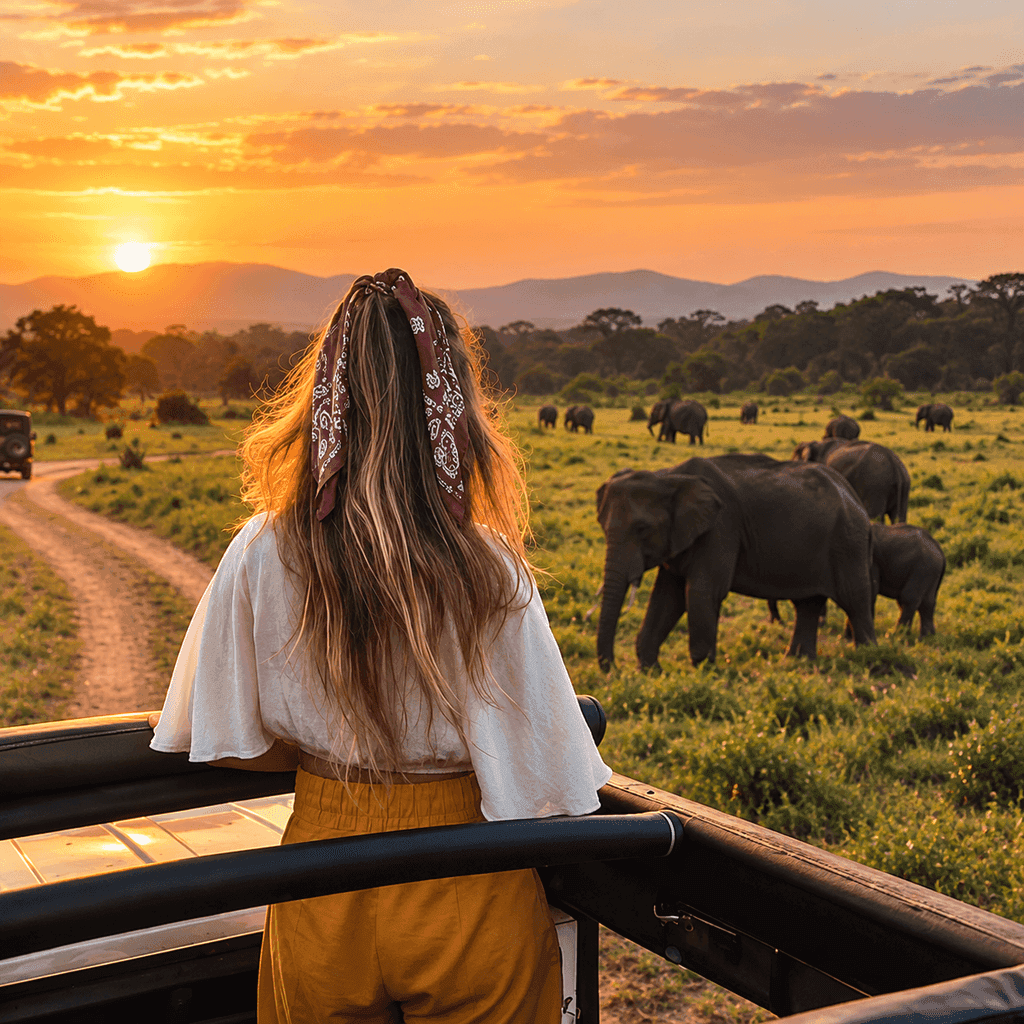
As the clock crosses 3:00 PM in the southern dry zone of Sri Lanka, a profound environmental metamorphosis sweeps across Udawalawe National Park. The blistering tropical heat of midday, which often pushes ambient temperatures above 34 degrees Celsius, begins its steady decline. Cool, refreshing gusts of wind sweep off the vast surface of the Udawalawe Reservoir, rustling the tall stalks of Guinea grass and carrying the damp, earthy scent of receding shorelines. The harsh, overhead equatorial glare softens into rich, honeyed tones of amber, burnt ochre, and deep crimson. This is the commencement of the evening sunset safari—a three-hour wildlife extravaganza spanning from 3:00 PM until the statutory park closing time at 6:00 PM.
For safari aficionados, naturalists, and landscape photographers, the late afternoon light in Udawalawe possesses a mystical, painterly quality unmatched anywhere else on the island. The low angle of the sun casts elongated, dramatic shadows across the open savannas, accentuating the rugged contours of the landscape and highlighting every wrinkle on the textured hides of grazing elephants. Against the majestic backdrop of the southern escarpment and the rugged summits of the Sabaragamuwa mountains, the plains take on a golden glow that transforms wildlife viewing into an unforgettable emotional encounter.
Moreover, the evening shift represents a period of intense biological revival. During the peak heat between 11:00 AM and 2:30 PM, the majority of the park’s mammals seek refuge deep within dense thorny thickets and beneath the sprawling, buttressed canopies of Kumbuk trees along riverbeds. But as the shadows lengthen, an invisible biological bell tolls throughout the reserve. Herds that have spent the afternoon resting quietly in the shade begin a synchronized, purposeful pilgrimage toward the park’s primary watercourses, reservoirs, and perennial waterholes. The open roads, previously deserted under the midday sun, become bustling thoroughfares for elephants, spotted deer, wild water buffalo, and opportunistic scavengers.
Chapter 2: Heat Dissipation & Evening Herd Movements
Understanding the physiological adaptations of the Asian elephant (Elephas maximus maximus) provides fascinating context to their evening behaviors. Unlike mammals possessing sweat glands distributed throughout their epidermis, elephants possess sweat glands solely between their toenails. To regulate their immense body temperature—which can generate massive metabolic heat across four to five tons of muscle and tissue—elephants rely on external thermoregulatory behaviors. The late afternoon represents their primary opportunity to cool their blood, rehydrate their systems, and repair their skin.
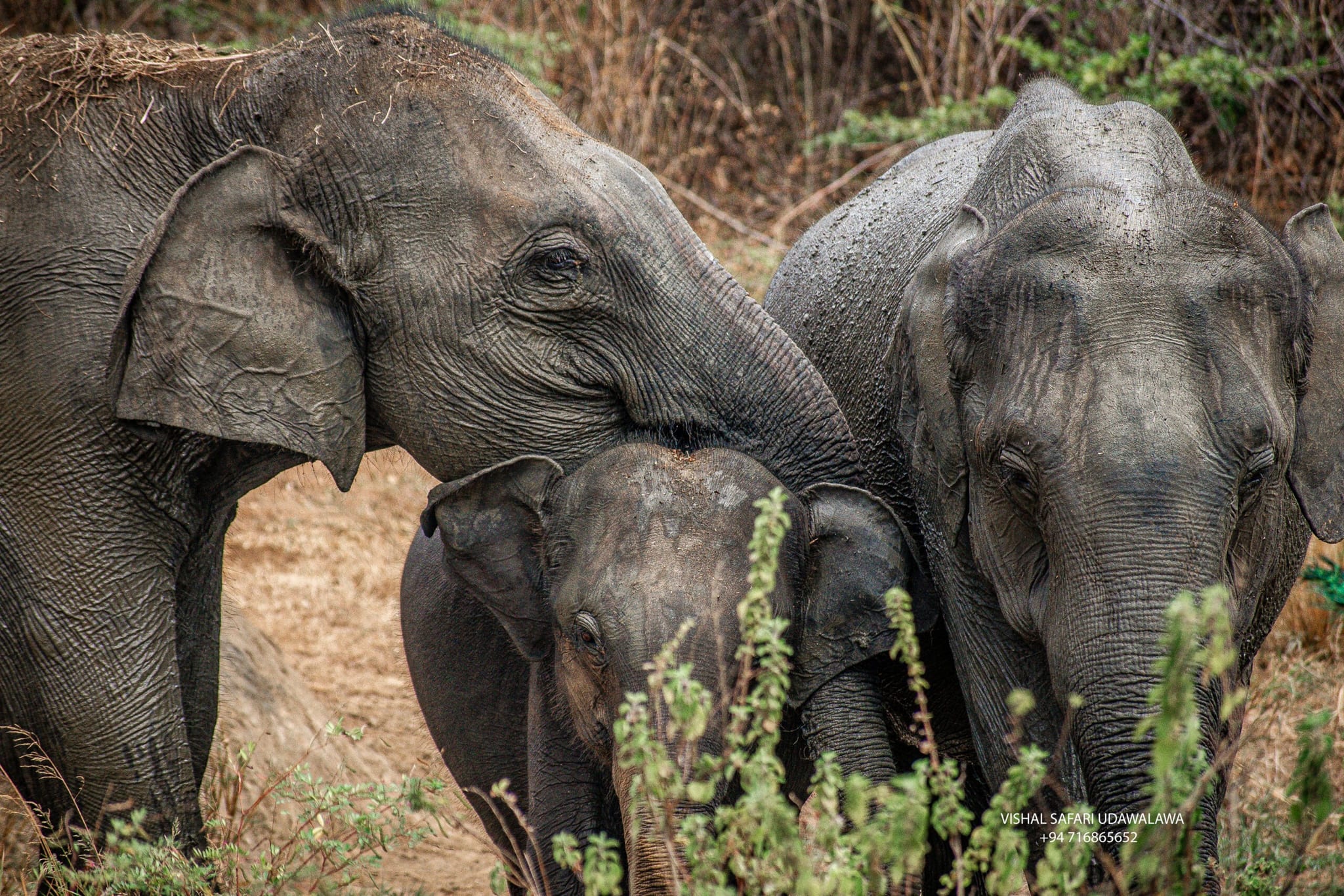
The primary radiator of an elephant consists of its enormous ears. The skin behind an elephant's ears is extraordinarily thin—barely a few millimeters thick—and is interlaced with a vast capillary network of blood vessels. As elephants walk toward the evening waterholes, they continuously flap their ears in a rhythmic motion. This flapping action circulates air across the surface blood vessels, cooling the blood by several degrees before it recirculates back to the animal’s core organs. When ambient temperatures drop in the late afternoon, this mechanism functions with maximum efficiency, visibly energizing the herds.
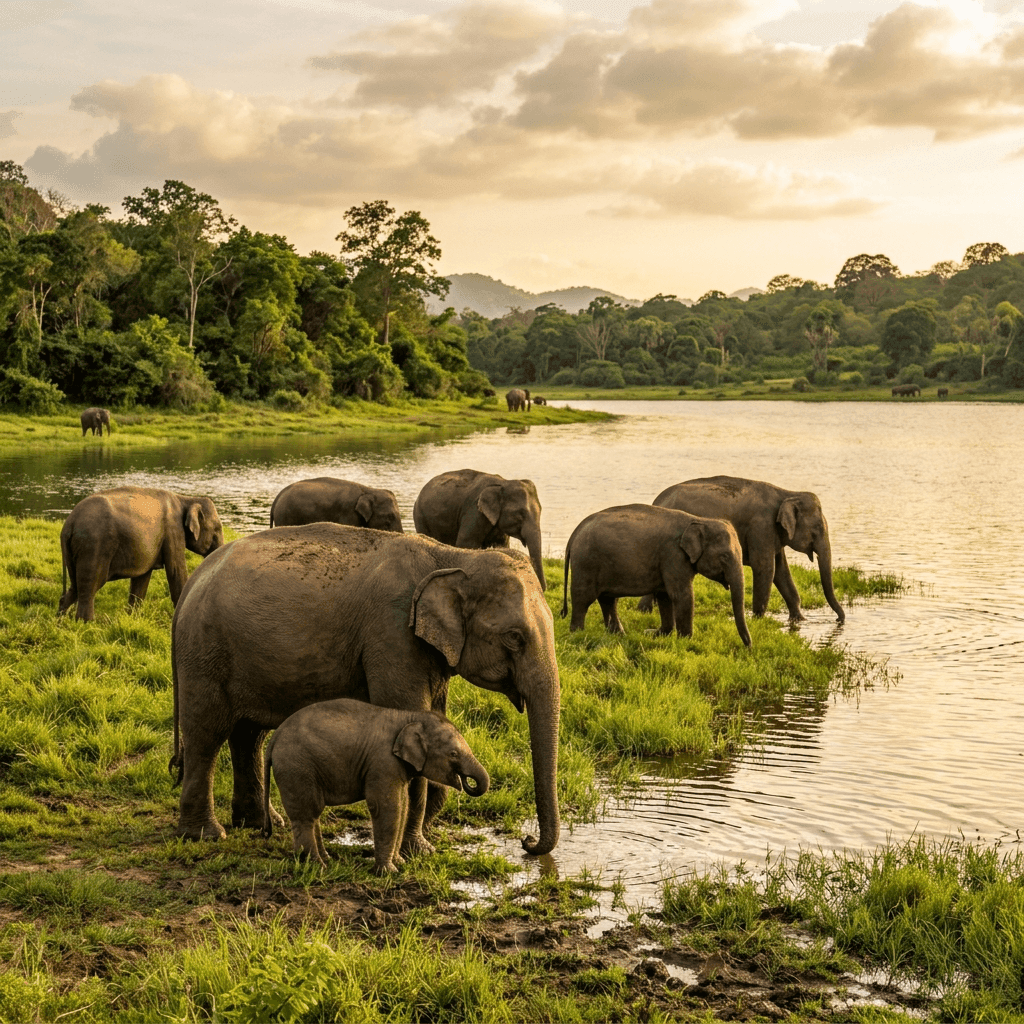
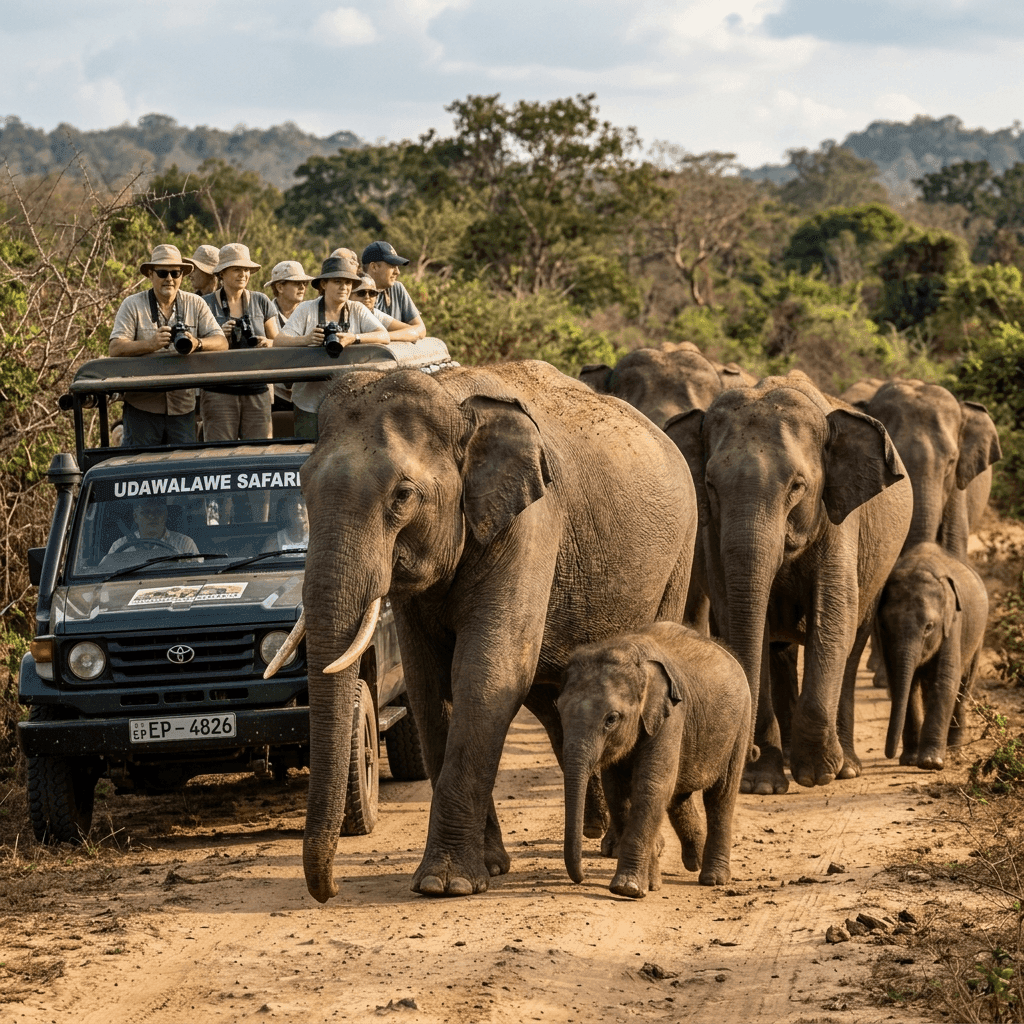
Upon arriving at the reservoir shoreline or muddy wallows, elephants engage in their famous multi-step spa ritual: bathing, mud wallowing, and dust coating. Watch closely as an elephant wades belly-deep into the calm waters of the reservoir. With obvious sensory delight, the animal submerges its head, rolling completely onto its side and blowing joyful cascades of water from its trunk. Calves scramble over the backs of their submerged mothers like buoyant corks, splashing and trumpeting with uninhibited joy. After thoroughly soaking their skin, the animals move to the adjacent mudflats, using their trunks and feet to scoop up thick, viscous clay and slather it across their backs, flanks, and heads.
This mud coating is not merely recreational; it is a vital survival adaptation. Once dried by the evening breeze, the layer of mud forms a protective crust that acts as a natural sunscreen against lingering ultraviolet rays, an insulating shield against biting flies (such as horseflies and tabanids), and an intensive skin moisturizer that maintains the elasticity of their thick, wrinkled hides. Finally, before continuing their evening foraging, elephants use their trunks to spray clouds of dry, fine red soil across their backs, creating the iconic terracotta-colored pachyderms that are the hallmark of Udawalawe photography.
Chapter 3: Solitary Tuskers & Bachelor Bulls of the Sunset Plains
While morning safaris are renowned for encountering bustling family herds with tiny calves, the late afternoon is the golden hour for observing the park's majestic, solitary adult bulls. Bull elephants in Sri Lanka exhibit vastly different social dynamics compared to their female counterparts. Upon reaching sexual maturity between twelve and fifteen years of age, young males are firmly, permanently nudged out of their birth herds by the matriarch. They transition into solitary lives or associate in fluid, temporary bachelor groupings that roam vast territories.
Sri Lanka holds a unique biological distinction regarding elephant tusks. Unlike African elephants, where both males and females carry tusks, only approximately 7 percent of wild male Sri Lankan elephants carry true, fully developed ivory tusks. The vast majority of males carry small, internal or vestigial tushes—short ivory stubs that rarely protrude significantly past the lip. Consequently, encountering a full-grown, magnificent tusker (*Etha*) in Udawalawe is a breathtaking wildlife event that elicits awe even from experienced guides.
In the late afternoon, these massive solitary bulls emerge from the deep, impenetrable interior forest reserves and make their way across open grasslands toward the primary reservoir bund. Possessing colossal shoulder heights exceeding 2.8 to 3.0 meters and weights surpassing four thousand kilograms, an adult tusker commands absolute authority. When a dominant bull approaches a waterhole, family herds respectfully yield the deepest drinking pool, allowing the patriarch to quench his thirst unhurriedly. If the bull is in *musth*—a state of intense hormonal surge characterized by streaming temporal glands—he displays heightened dominance, holding his head high, posturing with flared ears, and bellowing low, resonant warnings that reverberate across the water.
Experienced safari drivers navigate these bull encounters with consummate professionalism. They position the jeep at a safe, unthreatening angle, cut the diesel motor, and maintain a quiet, dignified vigilance. Watching an ancient tusker stand motionless on a grassy ridge as the orange sunset blazes behind his ivory tusks is one of the definitive, bucket-list wildlife spectacles of the Asian continent.
Chapter 4: Crepuscular Predators & Nocturnal Stirrings
As the sun sinks below the horizon and the sky shifts through shades of magenta, violet, and deep indigo, the ecological dynamics of Udawalawe undergo an abrupt shift. Day-active diurnal animals begin seeking safe roosting or bedding sites, while crepuscular (twilight-active) and nocturnal species awaken and begin their nightly patrols.
Among the most charismatic evening mammals is the Golden Jackal (Canis aureus naria). While jackals are occasionally seen sleeping in the shade at noon, the late afternoon galvanizes them into dynamic action. Small family packs or mated pairs trot purposefully along the edges of the dirt roads and across open savanna clearings, sniffing the air for rodents, ground-nesting birds, and carrion. Their synchronized evening choruses—a series of high-pitched, mournful yips and wailing howls—frequently punctuate the twilight air, signaling pack territory and coordinating nocturnal hunting routes.
Small feline predators also begin their prowl during this transition. The elusive Jungle Cat (Felis chaus kelaarti)—a long-legged, sandy-grey wildcat with tufted ears and short ringed tail—frequently emerges along the grassy verges of the secondary tracks between 5:15 PM and 5:45 PM. With razor-sharp vision and acute hearing, the jungle cat stalks silently through the Guinea grass, freezing mid-stride before executing a lightning-fast vertical pounce upon unsuspecting field mice or Indian hares (Lepus nigricollis). On extraordinarily lucky evenings, the shy Fishing Cat (Prionailurus viverrinus) may be spotted hunting along secluded marsh margins, using its webbed paws to scoop fish and crabs from shallow pools.
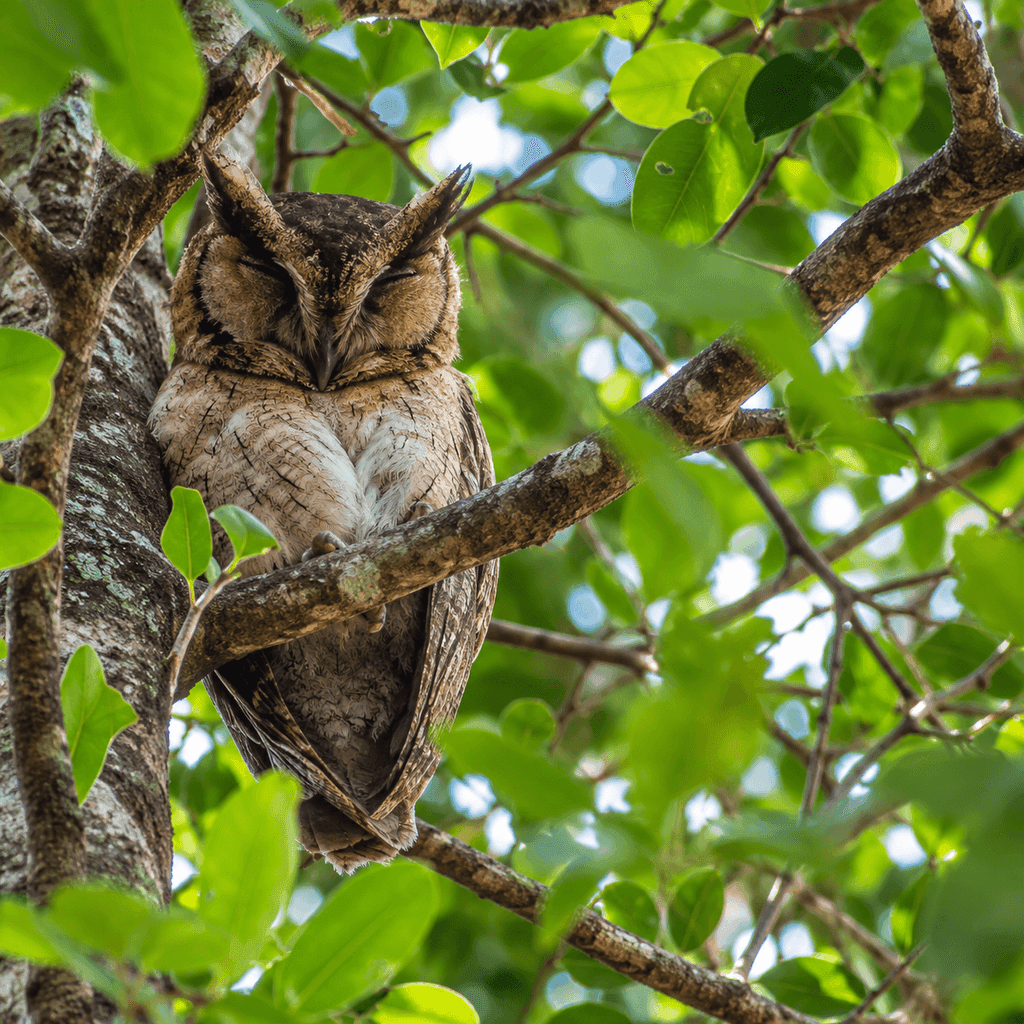
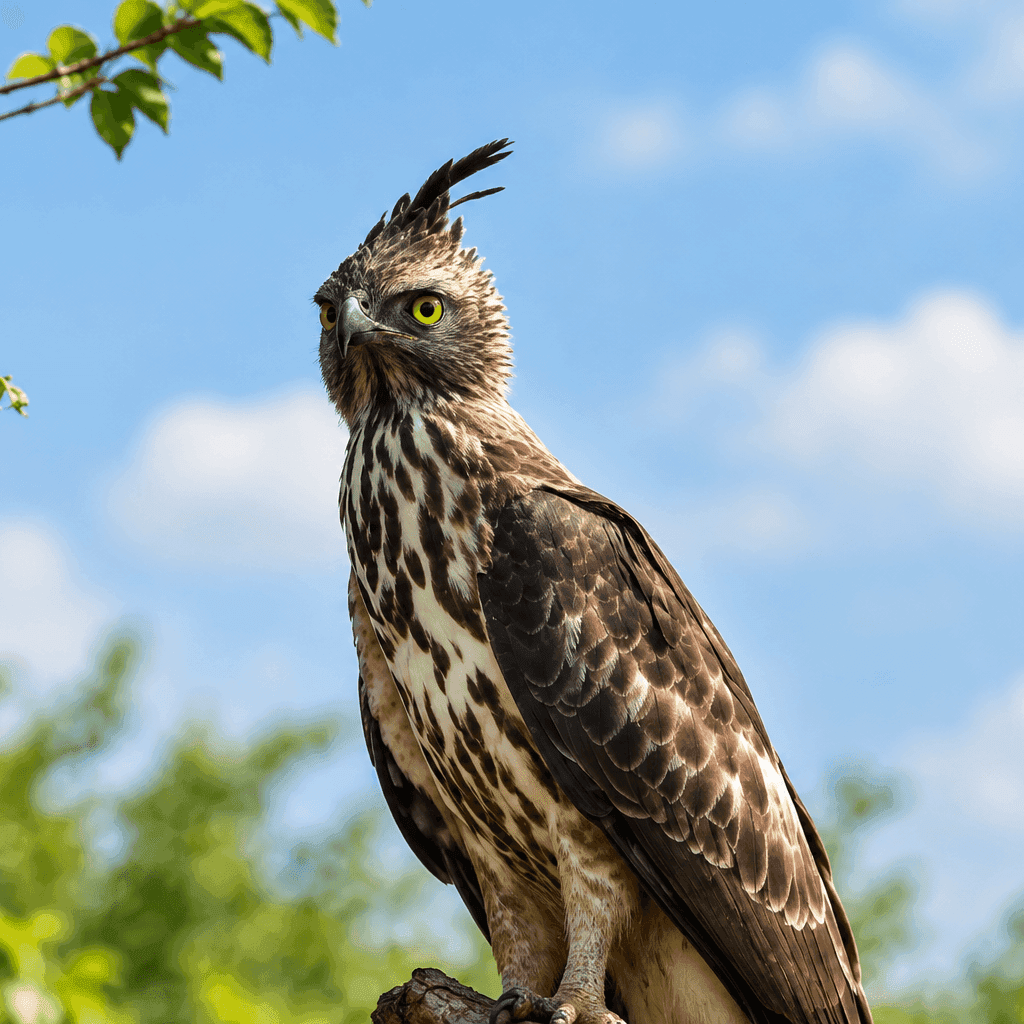
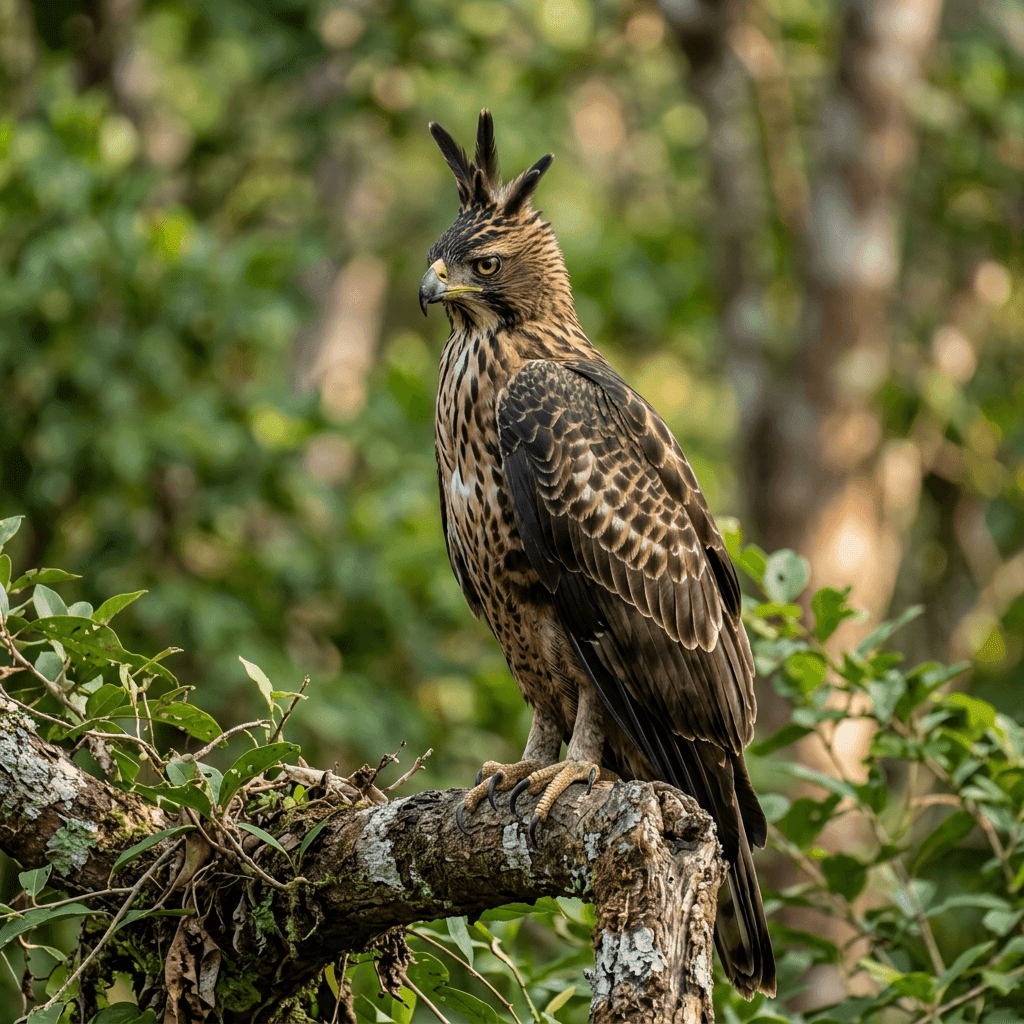
The avian kingdom undergoes its own changing of the guard. Diurnal raptors return to their favorite overnight roosts in tall Kumbuk trees, their silhouettes stark against the evening sky. Concurrently, nocturnal hunters emerge. Indian Nightjars (Caprimulgus asiaticus) flutter up from the warm gravel roads like giant brown moths, hawking for flying insects in the dusk before settling back onto the road surface, their glowing red eyes reflecting in the jeep's headlights. Brown Fish Owls (Ketupa zeylonensis) leave their riverside perches to sit prominently on low branches hanging directly over irrigation ditches, listening intently for the splash of frogs and freshwater crabs.
Chapter 5: Sunset Waterhole Hotspots & Tactical Routes
A triumphant evening safari requires an entirely different routing strategy than a morning drive. While morning safaris focus on early open-plains crossings, the evening drive should systematically position the vehicle around key aquatic convergence points during the final sixty minutes of legal daylight.
1. The Gonavidala Plains & Reservoir Peninsula
Extending into the southwestern bay of the main reservoir, Gonavidala features vast, expansive mudflats framed by dead tree skeletons and sweeping water views. Between 4:30 PM and 5:30 PM, this sector becomes a bustling nursery. It is not uncommon to witness forty to sixty wild elephants distributed across multiple family units grazing peacefully along the shoreline, drinking, and wallowing simultaneously. The open western exposure ensures uninterrupted views of the setting sun dipping directly behind the distant mountain escarpment.
2. The Timbolketiya Reservoir Bund Sector
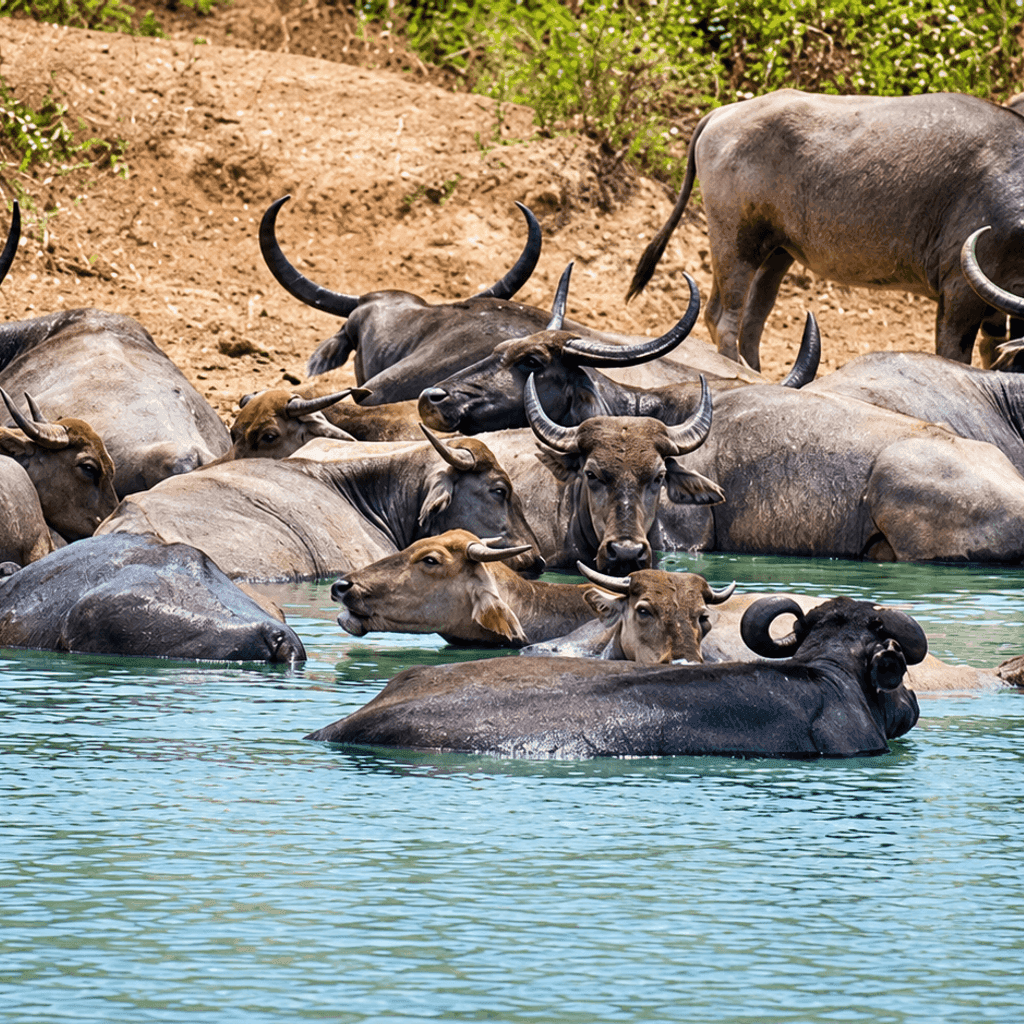
Located near the southern periphery, the Timbolketiya sector provides elevated viewpoints overlooking both deep water channels and reed beds. In the late afternoon, large herds of Wild Water Buffalo (Bubalus arnee) gather here to submerge themselves, often attended by flocks of Cattle Egrets and Red-wattled Lapwings picking parasites from their horned heads. Massive Mugger Crocodiles that basked in the afternoon sun slip silently back into the warm water as twilight approaches, their armored snouts creating V-shaped ripples on the glassy surface.
3. The Sinuggala Intermediate Thickets
Driving through the Sinuggala network between 3:15 PM and 4:15 PM allows travelers to catch animals in the very act of emerging from deep scrub. The narrow tracks create intimate, close-quarters encounters where elephants brush past the sides of the vehicle, tearing low-hanging branches from thorny bushes with satisfying crunches before proceeding to the open waterholes.
4. The Mau Ara Riparian Corridors
For bird enthusiasts, dedicating the final thirty minutes of light to the Mau Ara canal corridor yields spectacular sightings of roosting waterfowl. Thousands of Little Cormorants, Oriental Darters, Egrets, and Night Herons converge upon communal roosting trees, transforming entire dead tree canopies into living, chattering avian sculptures as the evening sky turns violet.
Chapter 6: Hour-by-Hour Evening Safari Timeline
Plan your afternoon adventure seamlessly with this comprehensive operational schedule:
- 2:15 PM – Hotel Pickup & Afternoon Departure: Your private safari jeep collects you from your accommodation. The afternoon sun is still warm, so ensure your hat, sunglasses, and sunblock are ready.
- 2:45 PM – Park Gate Registration & DWC Ticket Verification: Your driver processes official permits at the ticket office. While waiting, observe the troops of Toque Macaques (Macaca sinica) playing in the trees surrounding the administrative buildings.
- 3:00 PM – Park Entry & Forest Scrub Exploration: The safari begins. The first hour is spent exploring shaded tracks and teak plantation borders while the day's heat begins its steady descent. Early sightings often include monitor lizards, resting deer, and perched raptors.
- 4:00 PM to 5:15 PM – The Grand Waterhole Gathering: The premier wildlife window. Head toward the primary reservoir shoreline and wetland bays. Elephants arrive in force, initiating dramatic bathing, wallowing, and foraging rituals in comfortable, golden afternoon light.
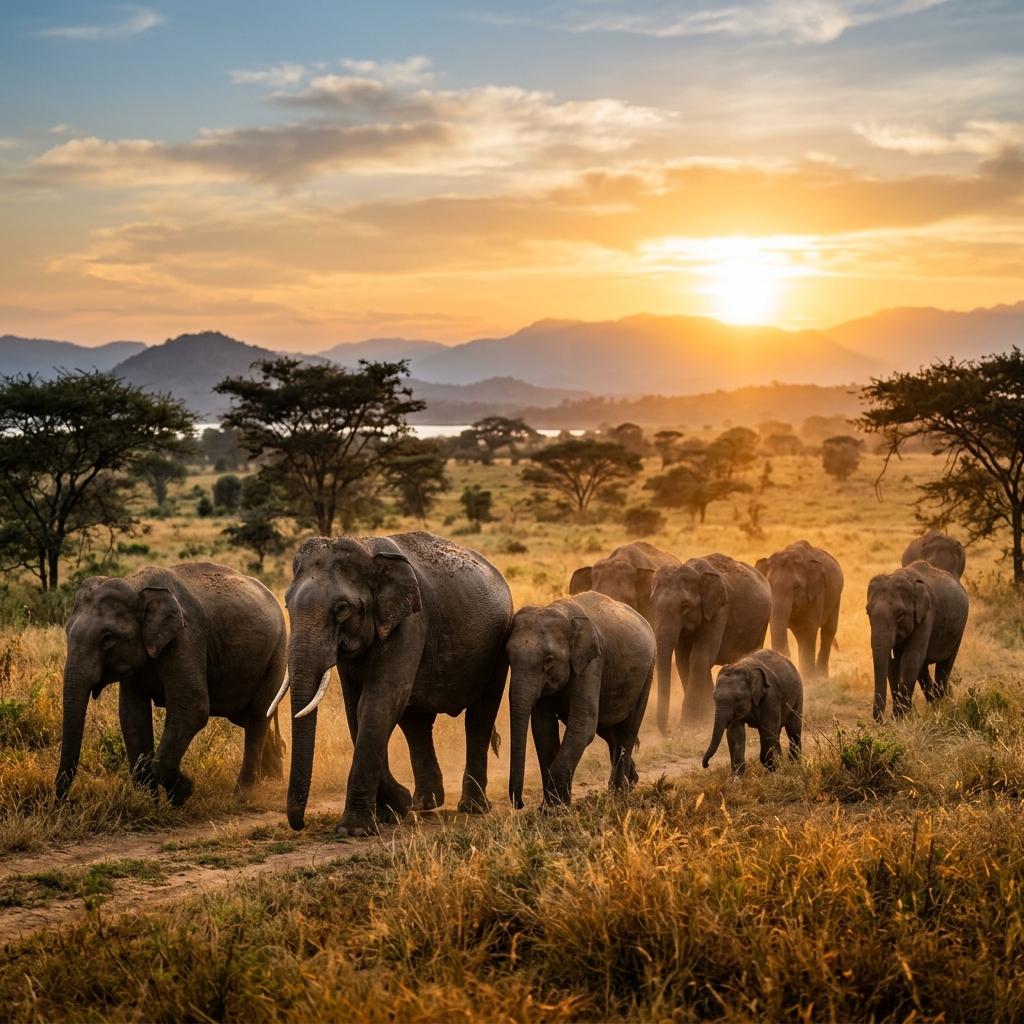
- 5:15 PM to 5:45 PM – The Sunset Panorama & Golden Silhouette Window: The sun touches the horizon. The landscape is bathed in radiant gold, amber, and crimson. Elephants walking along the reservoir ridges provide breathtaking photographic silhouettes against the glowing sky. Crepuscular wildlife (jackals, hares, nightjars) becomes actively visible.
- 5:50 PM – Journey Toward Park Exit: Drivers begin their synchronized, orderly transit toward the main gate, adhering strictly to the mandatory 6:00 PM park closure regulation.
- 6:00 PM – Gate Exit & Twilight Return Transfer: The vehicle checks out with Department of Wildlife Conservation gate wardens. You enjoy a cool, breezy drive back to your resort under twilight skies, arriving around 6:30 PM in time for dinner and evening relaxation.
Chapter 7: Golden Hour & Sunset Photography Masterclass
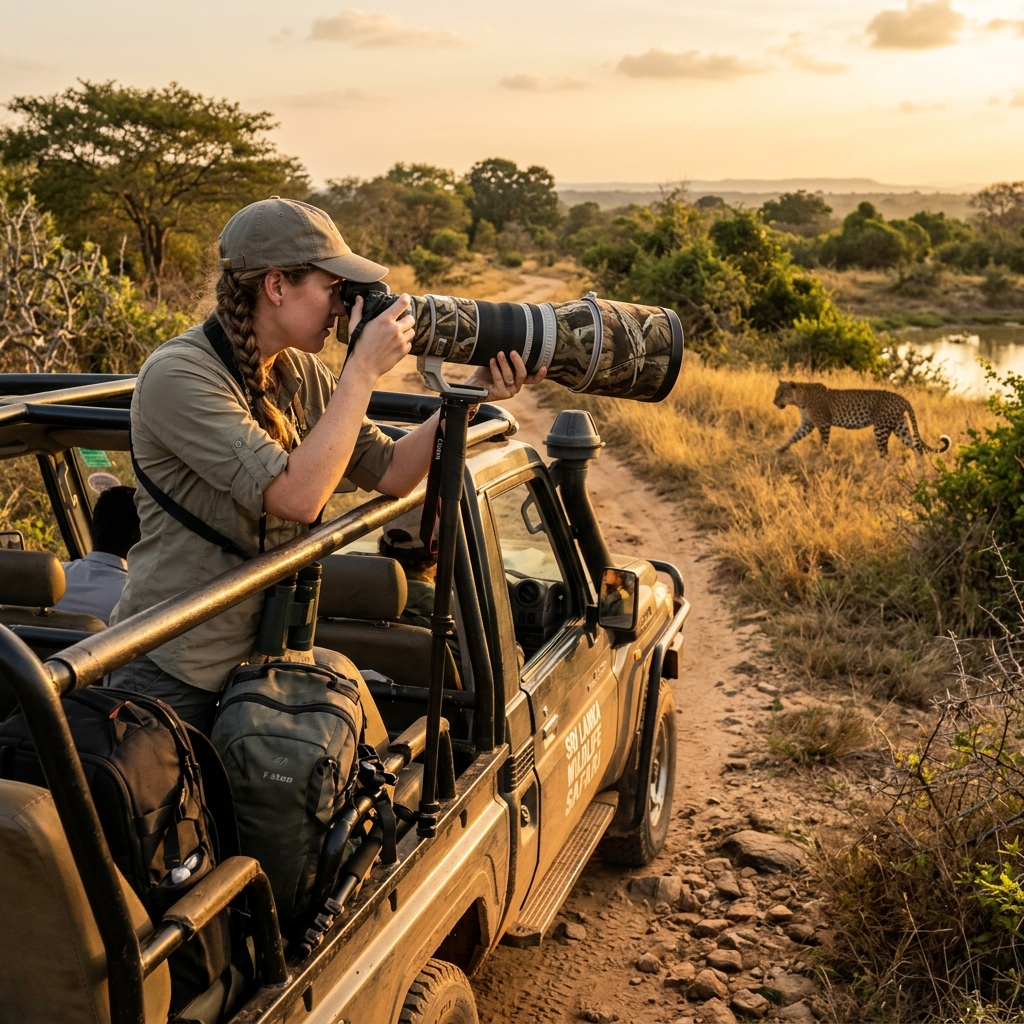
Photographing wildlife during the evening golden hour is one of the most rewarding yet technically demanding disciplines in photography. Master these advanced field techniques to capture breathtaking imagery:
1. Mastering Backlighting and Rim Lighting
Between 5:00 PM and 5:45 PM, position your vehicle so the low setting sun is situated behind your animal subject. This technique—known as backlighting—transforms ordinary wildlife portraits into fine-art masterpieces. The intense golden light catches the fine hairs along an elephant’s trunk, ears, and spine, creating a glowing golden halo (rim light) that cleanly separates the dark animal from a shadowed background. Additionally, when elephants kick up dry red dirt or spray water, the backlit particles glow like incandescent gold dust.
2. Perfecting Dramatic Silhouettes
To capture iconic elephant silhouettes against the fiery sunset sky, manually override your camera’s exposure meter. Point your lens at the brightest portion of the sky (just to the side of the setting sun), lock your exposure or set your shutter speed and aperture manually, and then recompose with the elephant in the foreground. This deliberately under-exposes the elephant into deep, velvet-black silhouette while preserving the full, saturated palette of reds, oranges, and purples in the sunset sky.
3. Managing Rapidly Plummeting Light Levels
In tropical latitudes near the equator, twilight transitions rapidly; once the sun touches the horizon, light levels drop by half every five minutes. Maintain your shutter speed at a minimum of 1/250th of a second to prevent camera shake, and progressively raise your ISO from 400 at 4:30 PM to 1600 at 5:15 PM, and up to 3200 or 6400 by 5:45 PM. Open your lens aperture to its widest setting (e.g., f/2.8 or f/4) to draw maximum light onto the camera sensor.
4. White Balance Strategies for Vivid Warmth
Auto White Balance (AWB) on modern digital cameras often attempts to "correct" warm sunset light by injecting unwanted cool blue tones. To lock in the rich, natural warmth of an Udawalawe sunset, manually switch your camera’s White Balance setting from Auto to "Shade" or "Cloudy" (approximately 6500K to 7000K). This amplifies the golden, amber, and reddish tones across the entire frame.
Chapter 8: Evening Safari Logistics & Gear Recommendations
Ensure a flawless afternoon journey by packing these targeted essentials:
| Essential Item | Recommended Specification | Field Benefit |
|---|---|---|
| Sun & Dust Eyewear | Polarized UV400 sunglasses with amber or bronze lenses | Cuts afternoon water glare on the reservoir and enhances animal contrast |
| Lightweight Scarf / Buff | Breathable cotton or microfiber neck gaiter | Shields mouth and camera gear from dry red road dust raised by moving jeeps |
| Insect Repellent | DEET 20-30% or Picaridin spray | Vital protection against mosquitoes that emerge in wetland bays around sunset |
| Fast Lens Optics | Lenses with wide apertures (f/2.8 or f/4) | Allows sharp, clean low-light wildlife captures past 5:15 PM without flash |
| Light Evening Layer | Long-sleeved linen shirt or light cotton cardigan | Protects against the brisk, wind-cooled ride back to the hotel after dark |
| Hydration & Light Snack | Fresh chilled water and electrolyte drinks | Replenishes fluids lost to the afternoon dry-zone heat |
Chapter 9: Conservation & Park Exit Regulations
The Department of Wildlife Conservation (DWC) strictly enforces a statutory park closing time of 6:00 PM across Udawalawe National Park. This regulation is not arbitrary; it is an essential conservation protocol designed to ensure that wild animals enjoy undisturbed, stress-free access to night-time feeding grounds and waterholes without harassment from artificial headlights, exhaust fumes, and engine noise.
All safari jeeps must report to the park exit gates prior to 6:00 PM. Safari drivers who exit late face immediate administrative penalties, substantial fines, and potential suspension of their commercial operating licenses. Consequently, when your professional driver informs you at 5:40 PM that it is time to depart the sunset waterhole and begin navigating toward the exit, please support their decision with courtesy. A professional driver balances providing you with an unforgettable golden hour experience against the non-negotiable legal and ethical obligation to protect the park and its wildlife.
Chapter 10: Frequently Asked Questions (FAQ)
Q1: Is an afternoon safari hotter than a morning safari?
The first hour (3:00 PM to 4:00 PM) can indeed feel warm, with ambient temperatures around 31°C to 34°C. However, all professional safari jeeps feature open sides and protective overhead canvas roofs that create a cooling breeze as the vehicle moves. By 4:15 PM, temperatures drop significantly, and the final ninety minutes (4:30 PM to 6:00 PM) are exceptionally pleasant and breezy.
Q2: Can we see elephant herds swimming during the evening safari?
Yes! In fact, the late afternoon is the primary time of day when wild elephants swim in the open waters of the Udawalawe Reservoir. Wallowing and swimming are central components of their evening cooling and socialization routines. Watching entire family herds submerge themselves up to their eyes while calves playfully clamber over their backs is a frequent highlight of the sunset shift.
Q3: What time does the sun actually set in Udawalawe?
Because Sri Lanka is situated close to the equator, sunset times vary only slightly throughout the calendar year. Sunset generally occurs between 5:50 PM and 6:20 PM depending on the season. During the peak safari months from December to April, the sky displays its most radiant golden and amber light between 5:15 PM and 5:50 PM.
Q4: Should I choose the morning or evening safari if I only have time for one?
If your primary focus is maximum bird activity, cool weather from the very start, and active feeding behavior, the morning safari holds a slight edge. However, if your heart is set on dramatic sunset photography, backlit golden-hour elephant herds, and observing bathing water wallows, the evening sunset safari is unbeatable. For the ultimate wilderness experience, booking both morning and evening drives provides the complete ecological picture.
Q5: Is flash photography permitted as it gets dark?
No. Artificial flash photography is strictly and universally prohibited inside all Sri Lankan national parks. Flashes frighten and disorient wild animals, can trigger defensive charges, and disrupt nocturnal wildlife behavior. Modern camera sensors and smartphone night-modes perform admirably in low ambient dusk light without any need for artificial flash.
Q6: Are there restrooms available during the evening safari?
Yes. The Department of Wildlife Conservation maintains clean, supervised public restroom facilities at designated rest sites inside the park. However, because the evening safari is slightly shorter (3 hours versus 4 hours in the morning) and focused intensely on catching the golden hour, most visitors choose to use the modern facilities at the park entrance gate before embarking at 3:00 PM.
Q7: Can we see leopards on the evening safari?
While leopards inhabit Udawalawe, they are solitary and predominantly nocturnal in this reserve, remaining largely within the dense scrub. The evening twilight occasionally rewards patient travelers with rare sightings of a leopard crossing a track or resting upon a rocky knoll near Sinuggala, but such encounters are fortunate bonuses rather than predictable daily occurrences.
Q8: What wildlife besides elephants can we expect on an evening drive?
In addition to dozens of wild elephants, evening safaris reliably showcase massive herds of wild water buffalo wallowing in wetlands, hundreds of spotted deer grazing along grassland borders, mugger crocodiles basking on sandy banks, golden jackal pairs on patrol, land monitors, and dozens of avian species returning to communal roosts.
Q9: How should I dress for the evening safari?
Wear light, breathable clothing in neutral tones (khaki, olive, tan). While short sleeves are ideal for the warm first hour, packing a lightweight long-sleeved overshirt or windbreaker is strongly recommended for the breezy return ride after sunset when temperatures drop and the open vehicle moves quickly along paved roads.
Q10: Can we visit the Elephant Transit Home right before our evening safari?
Yes, this is an exceptionally efficient and rewarding schedule. You can attend the Elephant Transit Home (ETH) public milk feeding at 2:30 PM, watch the orphaned calves drink their milk bottles until 3:00 PM, and have your private safari jeep pick you up directly from the ETH entrance gate to begin your afternoon park safari immediately at 3:15 PM.
.png)